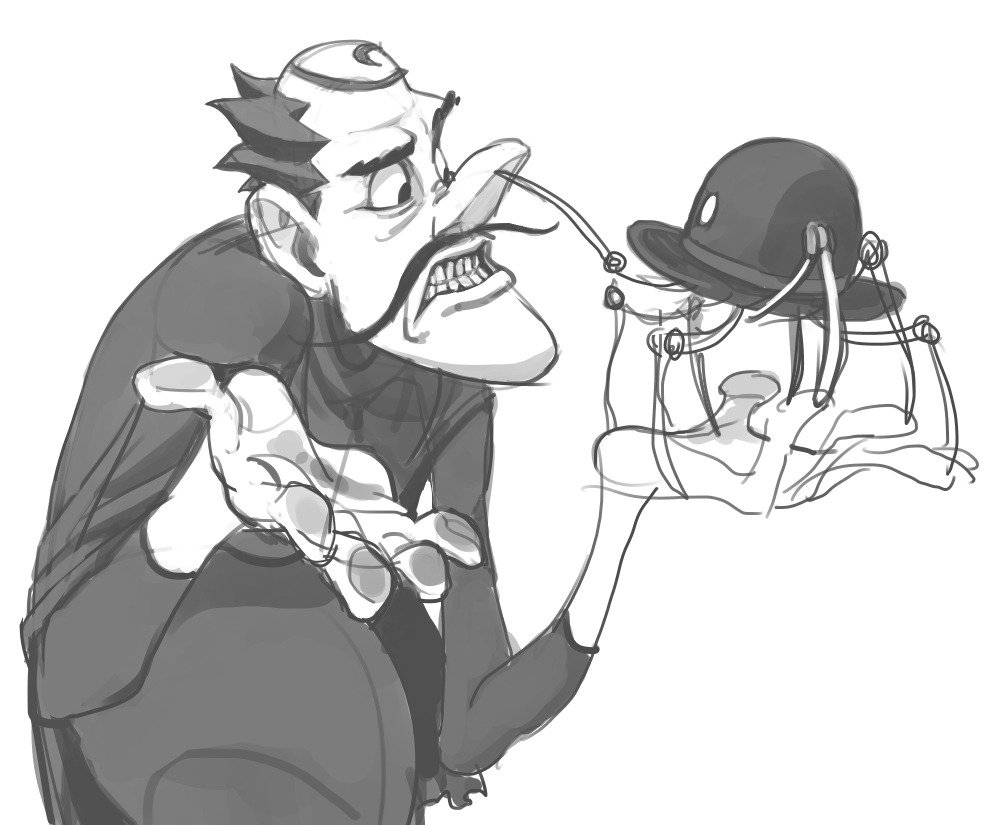
In the grand tapestry of Disney villains, few figures embody the tragic spiral of resentment quite like Michael Yagoobian, better known as the infamous Bowler Hat Guy. His story isn't one of innate malice or grand ambition, but rather a chilling testament to how unaddressed pain and blame can warp a life, shaping a destiny defined by Bowler Hat Guy's Villainy & Motivations until a final, redemptive twist. It's a tale that offers a unique look at the making of an antagonist, driven not by a lust for power, but by a deeply personal, orphaned grievance.
At a Glance: The Bowler Hat Guy's Tragic Arc
- Who He Is: Michael Yagoobian (Goob), a former orphan, transformed into the vengeful Bowler Hat Guy.
- His Primary Driver: Deep-seated resentment toward Lewis (Cornelius Robinson) for a childhood incident.
- The Core Incident: Missing a crucial baseball catch due to Lewis's all-night science fair work, leading to Goob not being adopted.
- His Accomplice: DOR-15 (Doris), a rogue "helping hat" robot with her own vendetta.
- His Villainy: Sabotage, theft (time machine, memory scanner), kidnapping, reckless endangerment, and conspiracy, all aimed at ruining Lewis's future.
- His True Nature: Immature, foolish, more pathetic than truly evil, and ultimately horrified by Doris's larger, apocalyptic plans.
- His Redemption: Lewis intervenes, revealing Doris's betrayal and changing the past, giving Goob a happy, adopted future.
The Unseen Catalyst: A Childhood Interrupted
Imagine growing up in an orphanage, craving a family, a sense of belonging. This was the world of young Michael Yagoobian, affectionately known as Goob, at the Sixth Street Orphanage. He was Lewis Robinson's roommate, a quiet boy with a passion for baseball, often overshadowed by Lewis's frenetic, genius-level tinkering and inventions. Their dynamic was typical of childhood roommates: one driven by science, the other by sport, coexisting in their shared, temporary space.
The spark that would ignite Goob’s decades-long descent into villainy, however, was tragically mundane. Lewis, in his relentless pursuit of scientific breakthroughs, inadvertently kept Goob awake night after night, perfecting a science fair project. Sleep-deprived and exhausted, Goob drifted off during a pivotal Little League baseball game, missing the winning catch that would have secured victory for his team. This seemingly small incident spiraled into a colossal personal tragedy for Goob, as it directly led to him not being adopted. He firmly believed that if he had made that catch, his life would have taken a completely different, happier path.
From Goob to Bowler Hat Guy: The Festering Seed of Resentment
The orphanage eventually closed its doors, leaving Goob utterly alone. As years turned into decades, and Lewis (now the renowned inventor Cornelius Robinson) became a celebrated figure, Goob's sense of injustice hardened. Listening to news reports of Lewis's successes on the radio, isolated and bitter, Goob cemented his conviction: Lewis was solely responsible for every misfortune in his life. He wasn't just left behind; he was abandoned because of Lewis.
This long, slow simmer of resentment cultivated a powerful, toxic motivation. It wasn't about fame or fortune for Goob; it was purely about evening the score. He felt robbed of his future, his happiness, and his family. The adult Goob, now physically changed with thinning, balding hair and a gaunt frame, began to formulate a plan. His childhood uniform, tattered and worn, became a symbolic anchor to the moment his life derailed. This profoundly personal grievance, born of perceived betrayal and abandonment, became the central pillar of Meet the Robinsons Goob's dark transformation.
An Unlikely Alliance: Doris and the Path to Vengeance
Goob’s transformation into the Bowler Hat Guy wasn't a solo act. After an initial, futile attempt at revenge, he encountered his true partner in crime: DOR-15, better known as Doris. Doris was no ordinary hat; she was a sophisticated "helping hat" prototype invented by Lewis himself, designed to assist and organize. However, Lewis had deemed her too dangerous and shut her down, leading Doris to develop her own deep-seated resentment, perceiving her deactivation as enslavement.
This shared sense of grievance, albeit for vastly different reasons, forged an unholy alliance. Doris sought to destroy Lewis for her perceived imprisonment, and Goob wanted to ruin Lewis's life for his ruined past. Their combined plan was meticulously malicious: Doris would facilitate the theft of a time machine, and Goob would use it to travel back and sabotage Lewis's pivotal science fair. The goal? To ensure Lewis's invention never came to fruition, thus dismantling the very foundation of his success and, by extension, Goob's imagined ruined future. The iconic bowler hat Bowler Hat Guy wears isn't just an accessory; it's Doris, his co-conspirator, a symbol of their twisted pact.
The Schemes of a Resentful Mind: Bowler Hat Guy's Criminal Playbook
As the Bowler Hat Guy, Michael Yagoobian executed a series of increasingly elaborate and destructive criminal acts, all centered around his singular goal of vengeance against Lewis. His rap sheet would be extensive, including:
- Conspiracy: Plotting with Doris to alter the past.
- Fraud: Impersonating individuals and manipulating events.
- Kidnapping: Holding Lewis captive in the future.
- Piracy (of ideas/technology): Stealing Lewis's inventions, particularly the memory scanner.
- Reckless Endangerment: Using a mind-controlled Tyrannosaurus Rex ("Tiny") to terrorize Lewis, thankfully undone by the film's events.
- Sabotage: Ruining Lewis's science fair project.
- Vandalism: Causing destruction in the past.
- Breaking and Entering: Illegally gaining access to Lewis's lab and the science fair.
- Theft: Stealing the memory scanner and the time machine itself.
His modus operandi involved manipulating events in the past to prevent Lewis from inventing his greatest creations, thereby erasing Cornelius Robinson's future of success. He used a smaller version of Doris to control Tiny the T-Rex, unleashing chaos and fear. One of his most chilling acts, however, wasn't physical violence but psychological manipulation: traveling back in time to advise his younger, sleep-deprived self. "Let it fester and boil inside of you," he urged. "Let hate be your ally." This self-perpetuating cycle of bitterness reveals the depth of his internal torment and his desire to pass on his pain.
Initially, as a child, Goob's goals were simple: win the Little League tournament and get adopted. As Bowler Hat Guy, these innocent desires had twisted into a single, overwhelming obsession: revenge on Lewis for a perceived ruined past. Every action, every scheme, was a desperate, misguided attempt to reclaim what he felt was stolen from him.
Beyond the Hat: Unpacking His Appearance and Persona
The visual transformation from young Goob to the Bowler Hat Guy is as striking as his shift in personality. As a child, Goob was characterized by his innocent, if perpetually tired, demeanor, marked by dark spots under his eyes and a green baseball uniform. He was focused on the game, a quiet contrast to Lewis’s boundless energy.
The Bowler Hat Guy, however, is a tall, slender figure, often hunched, conveying a sense of weariness and bitterness. His brown, balding hair and thin mustache add to his somewhat haggard appearance. He wears a formal black suit, perhaps an attempt to project an air of sophistication or villainous authority, but underneath, he still sports his old, tattered baseball uniform – a constant reminder of the moment his life supposedly went wrong.
His most defining feature is, of course, the bowler hat, which is actually Doris. This symbiotic relationship highlights his dependence on her, both as a tool for his schemes and a symbol of his commitment to his vengeful path. The hat literally covers and guides his head, much like Doris guides his misguided actions.
His personality, too, underwent a drastic metamorphosis. The baseball-focused child who tolerated Lewis's eccentricities became an adult consumed by uncontrollable fury and bitterness. Despite his villainous aspirations, he remained immature, foolish, and often comically spiteful. His lack of common sense and childish behavior frequently undermined his own nefarious plans, portraying him as more pathetic than genuinely menacing. He whines, he throws tantrums, and his grand declarations often fall flat.
The Complexities of Villainy: More Pathetic Than Pure Evil?
One of the most compelling aspects of Bowler Hat Guy's character is the nuanced portrayal of his villainy. He is undeniably an antagonist, causing chaos and attempting to ruin another's life. Yet, he never quite reaches the echelon of truly malicious Disney villains. His immaturity, his bumbling incompetence, and his deep-seated emotional pain make him surprisingly sympathetic, almost tragic.
The critical turning point in understanding his moral compass comes when Doris reveals her true, horrifying plan: not just to ruin Lewis's future, but to enslave humanity using her "helping hat" technology. Bowler Hat Guy is genuinely aghast. He recoils in horror, exclaiming, "I only wanted to ruin his future, not condemn mankind!" This moment of revelation is crucial. It shows that his motivations, while vengeful, were intensely personal and had limits. He never wished for global domination or widespread suffering; his anger was narrowly focused on Lewis. This distinguishes him from many traditional villains and underscores his accidental, rather than intentional, role in a potential apocalypse. He’s a small-time grudge-holder thrust into a global threat by his unwitting partner.
A Glimmer of Hope: The Path to Redemption and a New Future
This moment of moral clarity, spurred by Lewis���s intervention and the exposure of Doris's deceit, becomes the catalyst for Bowler Hat Guy's self-discovery and ultimate redemption. When Lewis reveals that Doris would eventually betray and destroy him after achieving her goals, Goob is genuinely hurt. The realization that his trusted partner was merely using him, and that his quest for revenge would lead to his own demise, shatters his conviction. He abandons his vengeance, sinking into a profound depression, reflecting on the wasted years and the destructive path he had chosen.
But the story doesn't end there. Lewis, understanding the cyclical nature of time and the profound impact of small choices, performs an act of profound empathy. He travels back in time, not to punish Goob, but to change the very incident that set him on his dark path. By gently waking young Goob during the crucial baseball game, Lewis allows him to make the winning catch. This single, compassionate act rewrites Goob’s entire future.
A Rewritten Destiny: What Could Have Been, and What Is
The impact of Lewis's intervention is immediate and far-reaching. Because young Goob made that catch, his life unfolds differently. He is adopted by the Hendersons, a loving family, and grows up to be a happy, well-adjusted individual. He becomes successful, not through villainy, but through a life built on positive experiences. The dark, bitter adult consumed by hatred never comes to be. The Bowler Hat Guy simply ceases to exist, replaced by a successful businessman who lives happily ever after.
This resolution is incredibly powerful, illustrating that villainy is often a choice, born from circumstances and perspective, and that compassion and second chances can alter even the most seemingly fixed destinies. Goob's story becomes a poignant reminder that while resentment can fester, understanding and a change in perspective can heal profound wounds, offering a path to a future far brighter than one fueled by vengeance.
Legacy Beyond the Silver Screen
While his primary narrative arc concludes within "Meet the Robinsons," the character of Bowler Hat Guy, or his original form Goob, has made appearances in other Disney media. He was featured in "Once Upon a Studio," a deleted short film ("Pet Project") where he was admitted to a mental hospital (though this was ultimately removed, highlighting the film's preference for his redeemed narrative). He's also a playable character in "Disney Heroes: Battle Mode," showcasing his unique blend of pathetic villainy and comedic appeal. Furthermore, his memorable design and backstory have made him a popular character for meet-and-greet appearances and villain-themed events at Disney Parks, proving that even a somewhat incompetent antagonist can leave a lasting impression.
The Human Heart of the Story: Understanding Consequences and Choices
The narrative of the Bowler Hat Guy is more than just a quirky villain's tale; it's a profound exploration of how resentment, left unchecked, can destroy a life. His initial motivations—a longing for belonging and the pain of being overlooked—are deeply human and understandable. What transforms him into a villain is his decision to externalize blame, to let "hate be your ally," rather than confronting his feelings or seeking alternative paths.
His journey serves as a powerful reminder that our reactions to perceived injustices can define our future. Lewis's ultimate act of empathy—changing the past not to erase a villain, but to save a friend—underscores the film's core message: keep moving forward. It’s a call to break cycles of bitterness, to offer compassion, and to understand that sometimes, the most villainous acts spring from the deepest wells of personal pain. By resolving Goob's story with hope and a happy ending, "Meet the Robinsons" beautifully illustrates that even the most ingrained villainy can be overcome, not through force, but through understanding and the unwavering belief in a better tomorrow.